
Software Development
Energy management for power storage facilities and AI data centers, Model-as-a-Service for AI, assistive technology and unmanned aircraft systems.
Energy Management System Software for BESS and Power Plants
Software for monitoring, controlling and analyzing battery energy storage systems (BESS), solar and wind power plants—from the field device to the cloud.
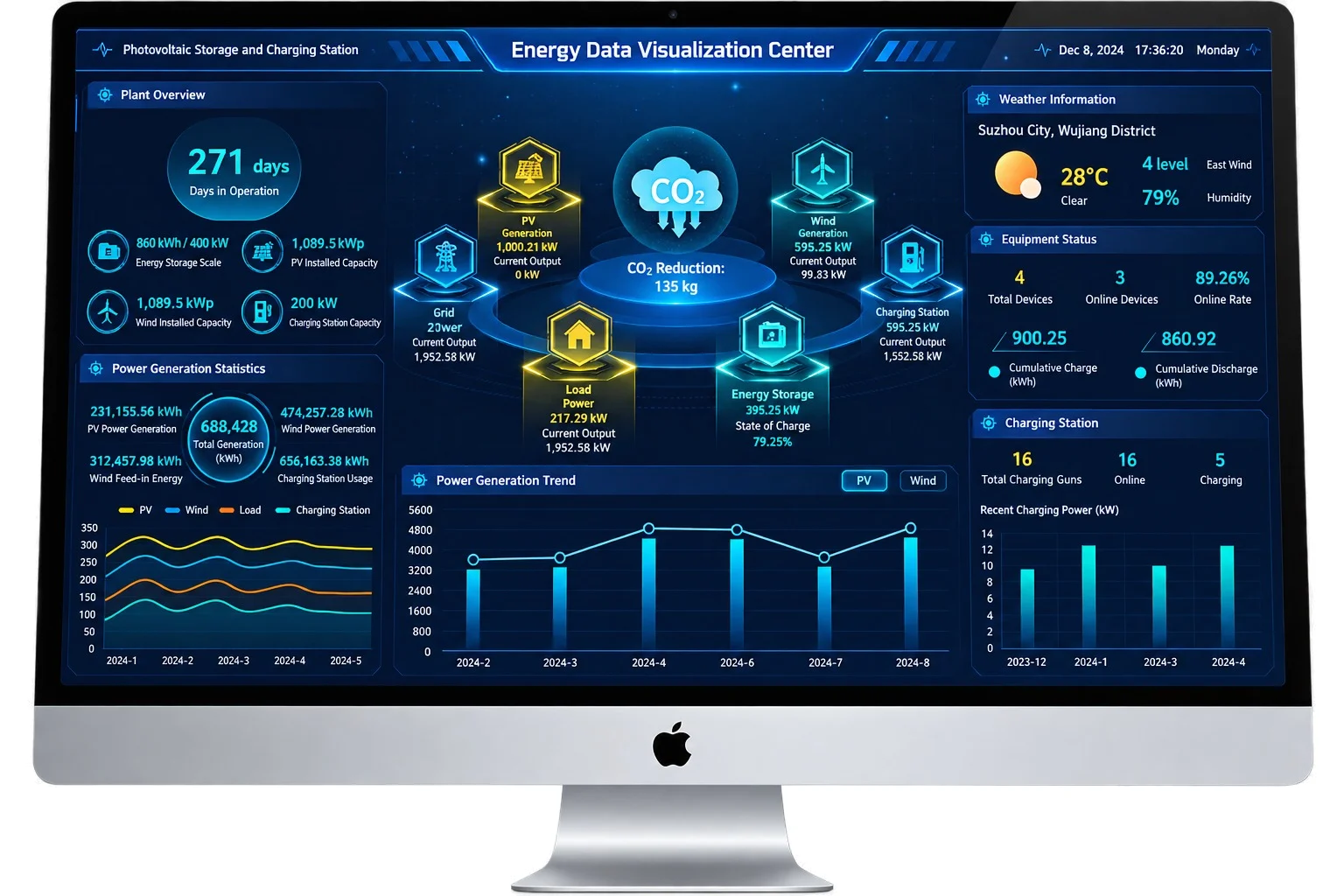
Equipment Control & Monitoring
- Real-time monitoring of equipment operating status
- SCADA-based secondary data acquisition, aggregation and monitoring
- Cloud-based configuration of control parameters and strategies
- Local reception, processing and execution of control commands
- Ultra-low-latency control for real-time power system operations
Power Plant Data Analytics
- Comprehensive analysis for BESS, solar and wind power facilities
- Revenue data tracking and performance analysis
- Analytical reports and data export
Energy Management & Control
- Distributed energy management and control
- Power supply optimization
Electrical Circuit Topology Visualization
- Visualization of the electrical topology across the entire BESS facility or power plant
- Network configuration, equipment information at key nodes and real-time metering data for each node
Revenue & Operational Management
- Monitoring and analysis of revenue, operational efficiency and KPIs
- Individual accounts for each electricity distribution destination
- Segregated management of operational data per destination
Cloud Platform / Network Security
Standardized centralized monitoring
- Collects, aggregates and analyzes computational results from individual BESS stations and presents comprehensive analytical reports
- Supports safety assessments, fault diagnostics, predictive fire risk detection and security management operations
- Continuously monitors the operational status of other electrical equipment within each BESS station, detects faults in real time and automatically generates alarms when abnormalities are identified
BESS and Intelligent EMS for AI Data Centers
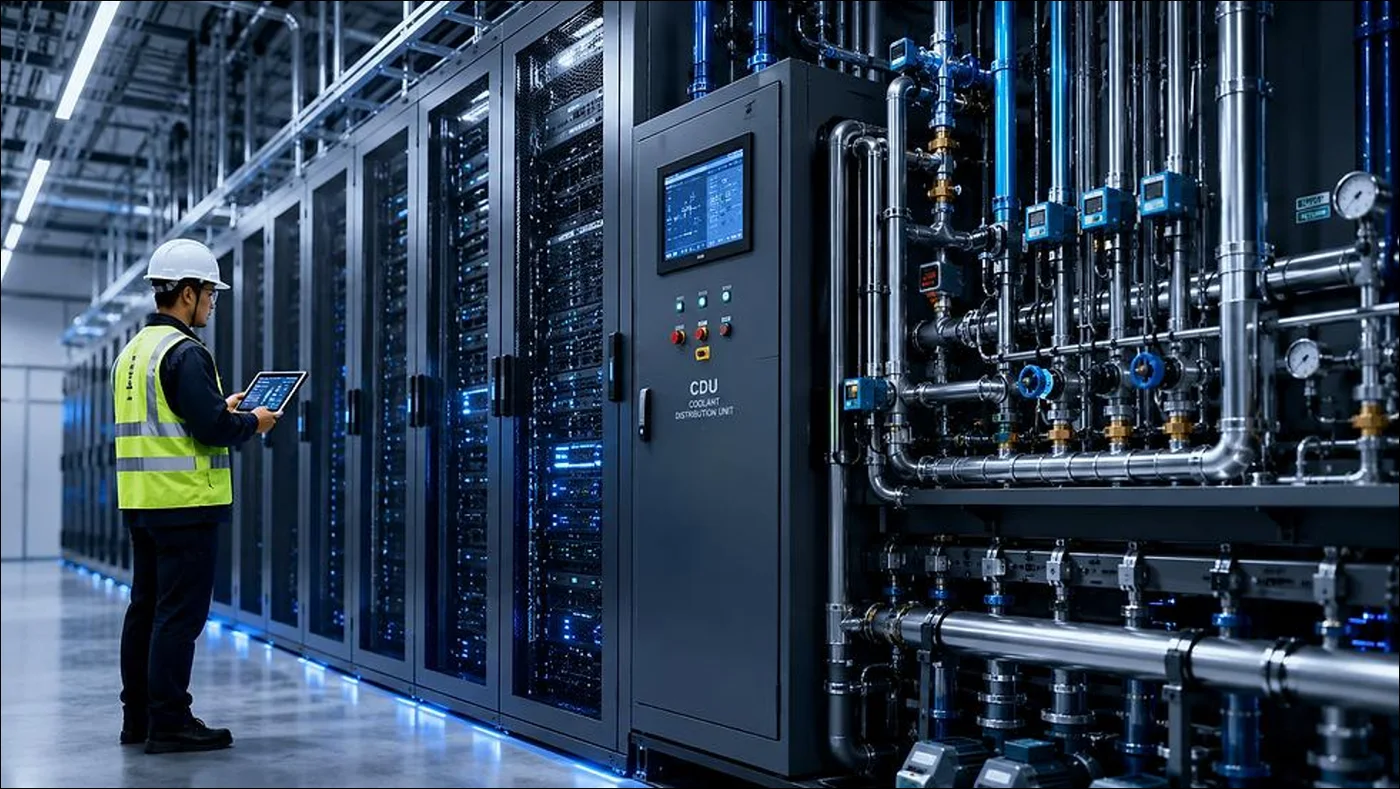
In AI data centers equipped with high-density GPUs such as NVIDIA B300, GB300 and Rubin, battery energy storage is critical infrastructure—not just emergency backup.
BESS plays an essential role in power quality stabilization, rapid GPU load fluctuation management, uninterrupted power supply support and electricity cost optimization. For large-scale AI data centers from 30 MW to 100 MW, integrating BESS with an advanced EMS significantly enhances power supply reliability, operational stability and economic efficiency.
Fast Power Response
Rapid charging and discharging compensates for sudden fluctuations in GPU power demand. Coordinated PCS and EMS control mitigates rapid load changes and their impact on facility infrastructure and the utility grid.
Backup Power & Continuity
Supports power continuity during grid outages, voltage sags and other disturbances. Integrated with UPS systems, BESS helps prevent GPU server shutdowns, computational interruptions and data loss.
Peak Shaving & Load Shifting
Charges during low-tariff periods and discharges during high-tariff periods, reducing demand charges and overall electricity costs depending on the tariff structure.
GPU Load Smoothing
AI training and inference generate large, rapid swings in power consumption. BESS smooths these fluctuations, stabilizing the demand seen by the grid.
Intelligent Energy Management
An integrated EMS coordinates BESS, UPS, power distribution, emergency generators and cooling for optimized distribution and efficiency across the data center.
Functions and Roles of BESS
- Uninterruptible power supply for cooling equipment
- Power stabilization for cooling systems
- Response to GPU workload fluctuations
- Peak power demand reduction (peak shaving)
- Emergency backup power for cooling systems
- Power optimization through energy management systems (EMS)
Example: 30 MW AI Data Center
Estimates based on a power demand requiring 30 MW of BESS capacity.
| BESS Configuration | Theoretical Supply Duration at 30 MW | Primary Application |
|---|---|---|
| 30 MW / 15 MWh | 30 min | Rapid load compensation and short-duration backup |
| 30 MW / 30 MWh | 1 hour | Peak shaving and backup power |
| 30 MW / 60 MWh | 2 hours | Electricity cost optimization and backup power |
| 30 MW / 120 MWh | 4 hours | Extended backup power and load shifting |
EMS Software Suite
An EMS and monitoring platform for the safe operation of energy storage facilities.
- Real-time risk assessment
- One-click system self-diagnostics
- Automatic fault alerts
- Advanced algorithm-based support
- Multi-source data recording
- Real-time fault event recording
- Fault location identification and visualization
- Highly reliable and secure data traceability
- Real-time monitoring of equipment operating data
- Power measurement and energy management strategy control
- Data analysis and visualization
- System-wide equipment topology visualization
- Substation account management
- High-speed frequency detection
- Rapid execution of frequency regulation strategies
- High-speed control command activation
- Fast-response coordinated power control across multiple units
- Dynamic process flow diagram visualization
- Alarm monitoring and management
- System status and operational parameter monitoring
- Equipment monitoring and control
- Collects and consolidates operational data and computational results from multiple BESS stations, providing comprehensive analytical reports
- Supports safety assessments, fault diagnostics, predictive detection of fire risks and security management operations
- Continuously monitors the operational status of other electrical equipment, detects faults and abnormalities in real time and automatically generates alerts
Hybrid Architecture for Proprietary and Open-Weight AI Models
Our MaaS platform transforms access to multiple AI models into a unified, enterprise-grade inference service.
GPT, Claude, Gemini and more — via official APIs
Because the weights of these models are not publicly available, we access them through the official APIs of each vendor and integrate them into a single, unified API gateway.
- Unified API interface for multiple AI models
- Centralized authentication and access control
- Token usage tracking and cost management
- Model routing, monitoring and failover
- Standardized model invocation
No need to build and maintain separate integrations with each AI vendor.
DeepSeek, Qwen, Llama, GLM, MiniMax and more — on our own GPUs
Subject to their licenses, open-weight models will be deployed on our own GPU clusters once our data center is operational, exposed through standardized APIs.
- Granular control over latency, bandwidth and SLAs
- Optimized inference economics through KV caching, batching and elastic scaling
- Tenant-level isolation of resources and data
- Data security and sovereignty within our controlled environment
- Seamless model switching by changing parameters, not applications
Balanced for enterprises
For enterprises operating multiple content platforms, our hybrid architecture balances:
- AI model quality and performance
- Data security and operational control
- Service stability and reliability
- Infrastructure efficiency and cost optimization
Expanding to multimodal and video generation
We plan to support advanced multimodal and video generation models, including future models such as MiniMax H3. Proprietary models such as Seedance will be integrated through official APIs or other authorized channels—covering text, image processing, multimodal reasoning and AI video generation.
Commercial-grade inference
Public availability of model weights does not make inference free. Production operation requires high-performance GPUs, storage, power and cooling, network bandwidth, monitoring, redundancy and model lifecycle management. We deliver commercial-grade AI inference designed for stability, reliability, scalability and cost efficiency—a scalable foundation for next-generation AI applications and digital content platforms.
AI-Powered Accessibility Software
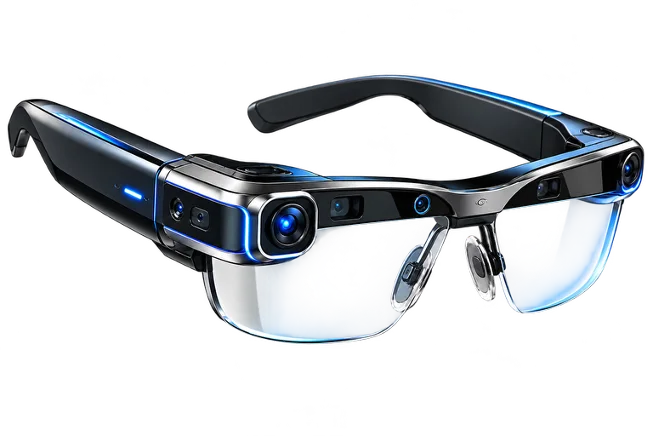
We specialize in AI-powered accessibility solutions for people who are blind, visually impaired or have reading difficulties.
Our technology combines computer vision, optical character recognition (OCR), artificial intelligence, speech synthesis and voice commands to convert visual information into spoken information.
Main functions
| Technology | Function |
|---|---|
| OCR | Reads printed and digital text aloud |
| Computer Vision | Recognizes objects, products and visual information |
| Facial Recognition | Identifies previously registered faces |
| Text-to-Speech | Converts recognized text into natural-sounding speech |
| Voice Recognition | Enables hands-free operation |
| Smart Reading | Locates requested text, numbers, dates and sections |
| AI Assistant | Answers questions and summarizes text |
| Digital Magnification | Enlarges text and adjusts its appearance for easier reading |
Software architecture
- Wearable camera / handheld device
- Visual information capture
- OCR / text recognition
- Computer vision / AI
- Voice command processing
- Context & content analysis
Integration with AI data centers
Our accessibility platform can use centralized GPU infrastructure for advanced services such as real-time scene descriptions, multilingual assistance, video understanding and AI-powered navigation.
UAS and Counter-UAS
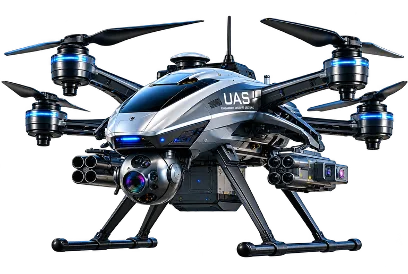
A UAS (Unmanned Aircraft System) is the complete system used to operate an aircraft without an onboard pilot—typically an unmanned aircraft (UAV or drone), a ground control station, communication links, navigation equipment, sensors and supporting software.
C-UAS (Counter-Unmanned Aircraft System) refers to technology designed to detect, identify, track and potentially neutralize unauthorized or hostile drones. We offer counter-drone capabilities as part of our proximity-data intelligence solutions.
RF Detection
Detects radio-frequency signals associated with drones.
Drone Tracking
Monitors detected drone activity and threats.
Threat Mitigation
Provides RF-based countermeasures against unauthorized drones.
Real-time Monitoring
Supports tactical situational awareness.
Mobile Deployment
Supports portable, stationary and airborne configurations.
System Integration
Integrates with broader intelligence and security operations.
Interested in our software?
Request detailed materials or talk to our team about your project.